Nepalese food guide
Momo vs gyoza, mandu, jiaozi and dim sum: Asian dumplings compared
Momo are the dumplings of Nepal and Tibet: dough filled with meat or vegetables, herbs and spices, and mainly steamed. Japanese gyoza are fried, Chinese jiaozi are steamed, boiled or fried, Korean mandu are the Korean kind, and dim sum is a whole meal of small dishes. Our pubs serve momo, in veg and chicken.
Reviewed . Dish names and heat marks come from our pubs' menus at that date; your pub's own website has its current menu.
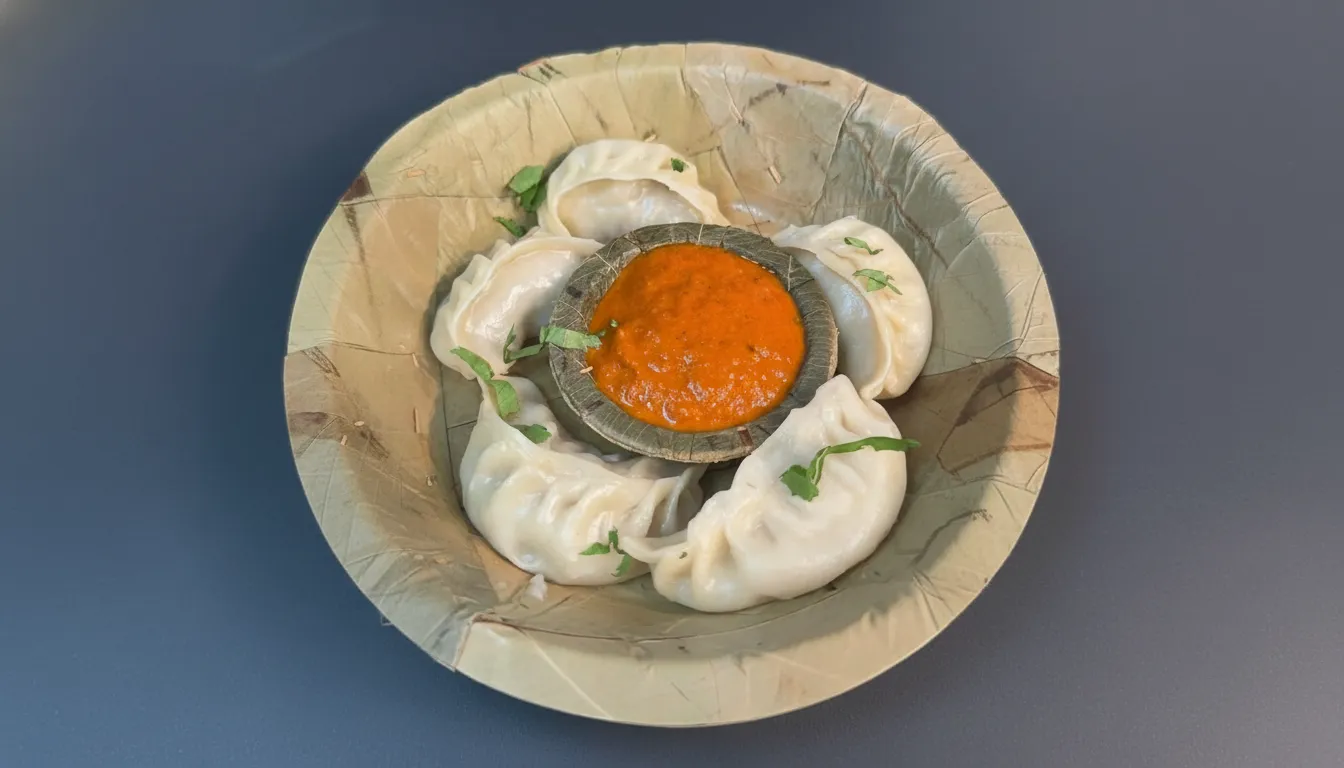
What makes a momo a momo?
Dumpling is the general English word. Momo is the name for the Tibetan and Nepalese one: a small piece of dough filled with meat or vegetables, herbs and spices. The Nepal Tourism Board says the dish is thought to have come from Tibet with Newar traders, and calls it probably the most popular fast food in Nepal.
Momo are mainly steamed. In Nepal they are also fried, or dropped into a soup and called jhol momo.
Sources: Cambridge Dictionary: momo; Nepal Tourism Board: Food and culinary; Cambridge Dictionary: dumpling.
Momo, gyoza, jiaozi, mandu and dim sum side by side
If you already know one of these, the table shows where momo sit beside it. The last column shows which of them our pubs serve.
| Dumpling | From | What it is | At our pubs |
|---|---|---|---|
| Momo | Nepal and Tibet | Dough filled with meat or vegetables, herbs and spices. Mainly steamed, also fried or served in soup. Source for Momo: Cambridge Dictionary: momo | Yes |
| Gyoza | Japan | Meat or vegetables wrapped in dough and fried in oil. The word comes from the Chinese jiaozi. Source for Gyoza: Cambridge Dictionary: gyoza | No |
| Jiaozi | China | Crescent-shaped dumplings with a minced filling, steamed, boiled or fried. Source for Jiaozi: Wiktionary: jiaozi | No |
| Potsticker | China | A dumpling cooked in steam, then fried, and served with sauces. Source for Potsticker: Cambridge Dictionary: potsticker | No |
| Mandu | Korea | The dumpling of Korean cooking. Source for Mandu: Wiktionary: mandu | No |
| Wonton | China | Dough wrapped around fish, meat or vegetables, found especially in soup. Source for Wonton: Cambridge Dictionary: wonton | No |
| Shumai | China and Japan | A small dumpling filled with meat or fish and cooked in steam. Source for Shumai: Cambridge Dictionary: shumai | No |
| Dim sum | China | Not one dumpling but a meal or snack of small dishes, fried or steamed. Source for Dim sum: Cambridge Dictionary: dim sum | No |
Momo vs gyoza
Gyoza are Japanese: meat or vegetables wrapped in dough and fried in oil. Momo are mainly steamed, so the wrapper stays soft all the way round. The two are cousins, and the word gyoza comes from the Chinese jiaozi.
If gyoza are your usual order, momo will feel familiar: a filled parcel, eaten with a dip.
Sources: Cambridge Dictionary: gyoza; Oxford Advanced Learner's Dictionary: gyoza.
Momo vs mandu and jiaozi
Mandu are the dumplings of Korean cooking. Jiaozi are the Chinese crescent-shaped dumpling with a minced filling, steamed, boiled or fried; fry a steamed one and it is called a potsticker. Momo belong to the same family and are the Nepalese and Tibetan branch of it.
Sources: Wiktionary: mandu; Wiktionary: jiaozi; Cambridge Dictionary: potsticker.
Is momo a kind of dim sum?
No. Dim sum is a Chinese meal or snack made up of many small dishes, fried or steamed. Some of those dishes are dumplings, such as shumai, and wonton turn up in soup. Momo are one dish, not a spread.
Sources: Cambridge Dictionary: dim sum; Cambridge Dictionary: shumai; Cambridge Dictionary: wonton.
The momo on our menus
Our kitchens are Nepalese, so the dumpling they make is momo. They do not serve gyoza, mandu or dim sum. These are the exact names on the menus.
Momo (Veg/Chicken)
No heat mark on the menu.
On seven of our ten food menus: The Queen Elizabeth, King's Lynn, The Old Crown, Girton, The White Horse, Waterbeach, The Corner House, Cambridge, The Bell, Sawtry, The Railway, Whittlesey, The White Horse Inn, Swavesey
Veg Momo (Steam / Chilli)
Menu description: Famous traditional Nepalese dumplings made with various seasonal vegetables. Heat mark: Medium.
On three of our ten food menus: The Prince of Wales, Bromham, The Barley Mow, Hartford, The Old School House, Stony Stratford
Chicken Momo (Steam / Chilli)
Menu description: Made with chicken mince and herbs. Heat mark: Medium.
On three of our ten food menus: The Prince of Wales, Bromham, The Barley Mow, Hartford, The Old School House, Stony Stratford
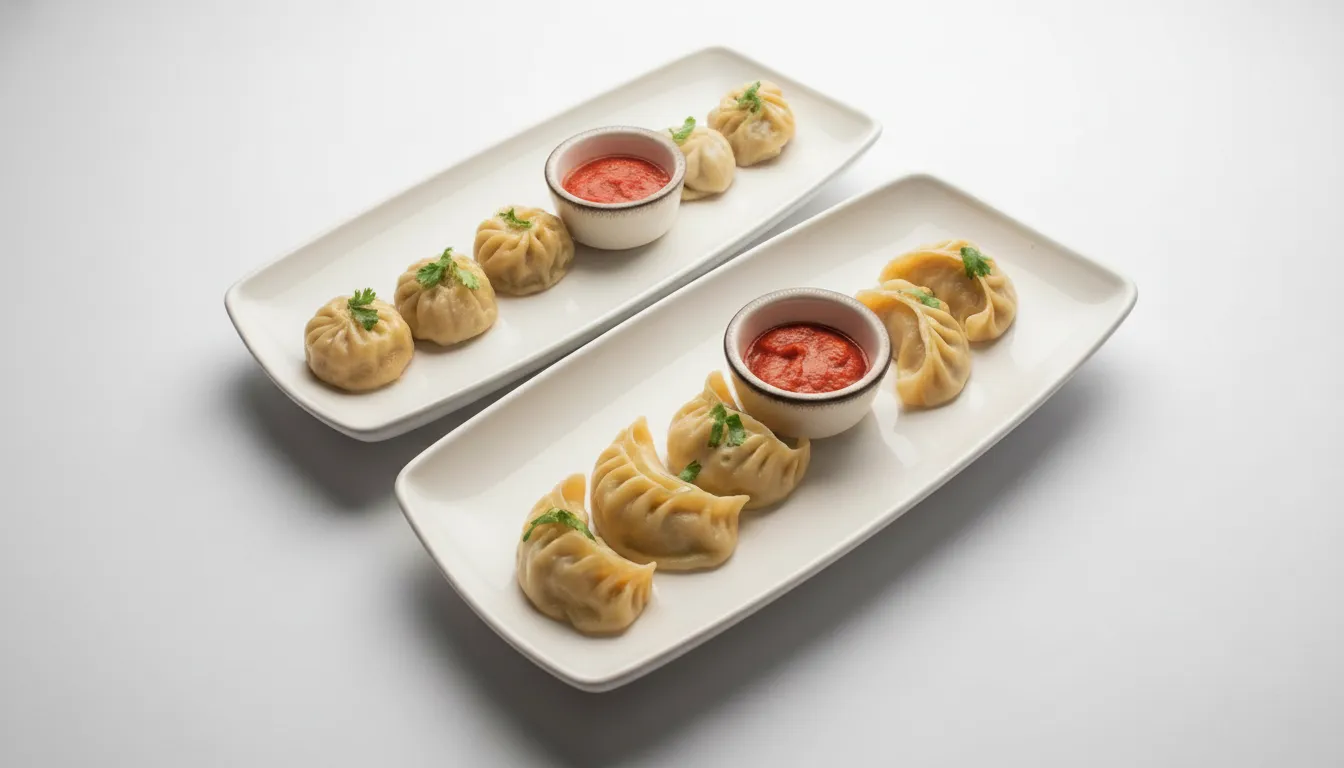
More in our momo guide. In Cambridge? See momo in Cambridge. For noodles, read chowmein and Asian noodles compared, or find your nearest pub in the pub finder.
Momo and dumplings: questions
What is the difference between momo and dumplings?
Momo are a kind of dumpling, so the real question is which kind. Momo are the Tibetan and Nepalese dumpling: dough filled with meat or vegetables, herbs and spices, and mainly steamed. Dumpling is the general English word for all of them.
What is the difference between momo and gyoza?
Momo come from Nepal and Tibet and are mainly steamed. Gyoza are Japanese and are fried in oil. Both are filled dough parcels, and the word gyoza itself comes from the Chinese jiaozi.
Are momo the same as mandu or jiaozi?
They are relatives, not the same dish. Mandu are the dumplings of Korean cooking and jiaozi are Chinese crescent-shaped dumplings that are steamed, boiled or fried. Momo are the Nepalese and Tibetan member of the family, seasoned with their own herbs and spices.
Is momo a type of dim sum?
No. Dim sum is a Chinese meal or snack made up of many small dishes, some of which are dumplings. Momo are a single dish from Nepal and Tibet, eaten as a snack, a starter or a meal.
Are momo steamed or fried?
Mainly steamed, though in Nepal they are also fried or served in a soup called jhol. On three of our ten food menus, momo are listed in a Steam and a Chilli version. Ask your pub how its momo are cooked.
Which dumplings do Lapen Inns pubs serve?
Momo, on all ten of our food menus, listed as Momo (Veg/Chicken), Veg Momo (Steam / Chilli) and Chicken Momo (Steam / Chilli). The pubs do not serve gyoza, mandu or dim sum.
More from the food guide
- Nepalese cuisine and food explained
The main guide: momo, dal bhat, timur and how the food differs from Indian food.
- Is Nepalese food spicy?
The three heat marks on our menus, the hot dishes and the spices that are not chilli.
- Nepalese curry explained
Khasi ko masu, tarkari, bhutuwa and the other curry names on a Nepalese menu.
- Gurkha, Himalayan or Nepalese?
What Gurkha, Himalayan, Nepali and the place names on a menu actually tell you.
- Chowmein and chilli dishes
Why chowmein, chilli chicken and chilli mogo sit beside momo and curry.
- Chowmein and Asian noodles compared
Nepali chowmein beside lo mein, Hakka noodles, yakisoba and japchae.
Sources
Dish names, descriptions and heat marks are taken from the Lapen Inns menus. Facts about language, plants and history come from these sources.
- Cambridge Dictionary: momo: momo are a Tibetan, Nepalese or North Indian dumpling, filled and cooked in steam
- Nepal Tourism Board: Food and culinary: dal bhat as the staple Nepali meal of dal, rice, vegetable and achar; jimbu as a dried Himalayan herb; momo as steamed, fried or served in soup, and said to have come from Tibet
- Cambridge Dictionary: dumpling: a dumpling is a small ball of dough, often cooked in hot liquid
- Cambridge Dictionary: gyoza: gyoza are a Japanese food of meat or vegetables wrapped in dough and fried in oil
- Oxford Advanced Learner's Dictionary: gyoza: the word gyoza comes from the Chinese jiaozi
- Wiktionary: jiaozi: jiaozi are Chinese crescent-shaped dumplings filled with a minced stuffing and steamed, boiled or fried (a community dictionary, used because the institutional dictionaries we could open do not list the word)
- Wiktionary: mandu: mandu are dumplings in Korean cuisine (a community dictionary, used for the same reason)
- Cambridge Dictionary: potsticker: a potsticker is a Chinese dumpling cooked in steam, then fried, and served with sauces
- Cambridge Dictionary: wonton: wonton are dumplings that are part of some Chinese dishes, especially soup
- Cambridge Dictionary: shumai: shumai are small Chinese or Japanese dumplings filled with meat or fish and cooked in steam
- Cambridge Dictionary: dim sum: dim sum is a Chinese meal or snack of small dishes, fried or cooked in steam
Your next stop
Try it at a Lapen Inns pub
Ten local pubs, each with a bar, pub favourites and a Nepalese kitchen. Choose your pub, then check its own website for the current menu and hours.